What we cut into
Materials
Four materials, each with its own way of holding a mark. We will tell you which one suits what you are sending, and say so if none of them do.
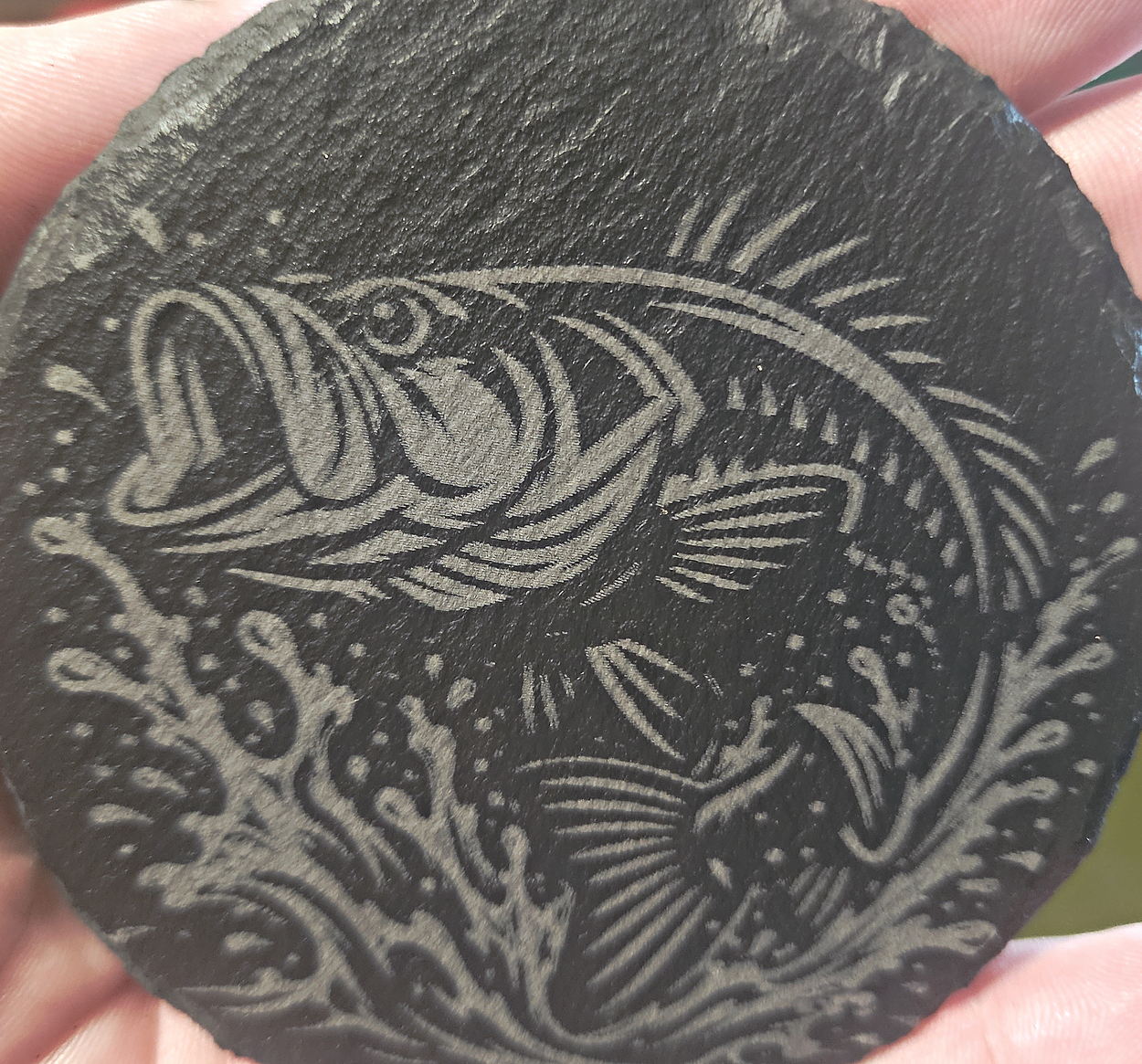
Line work on slate, at coaster size. Nothing here is thicker than it has to be.
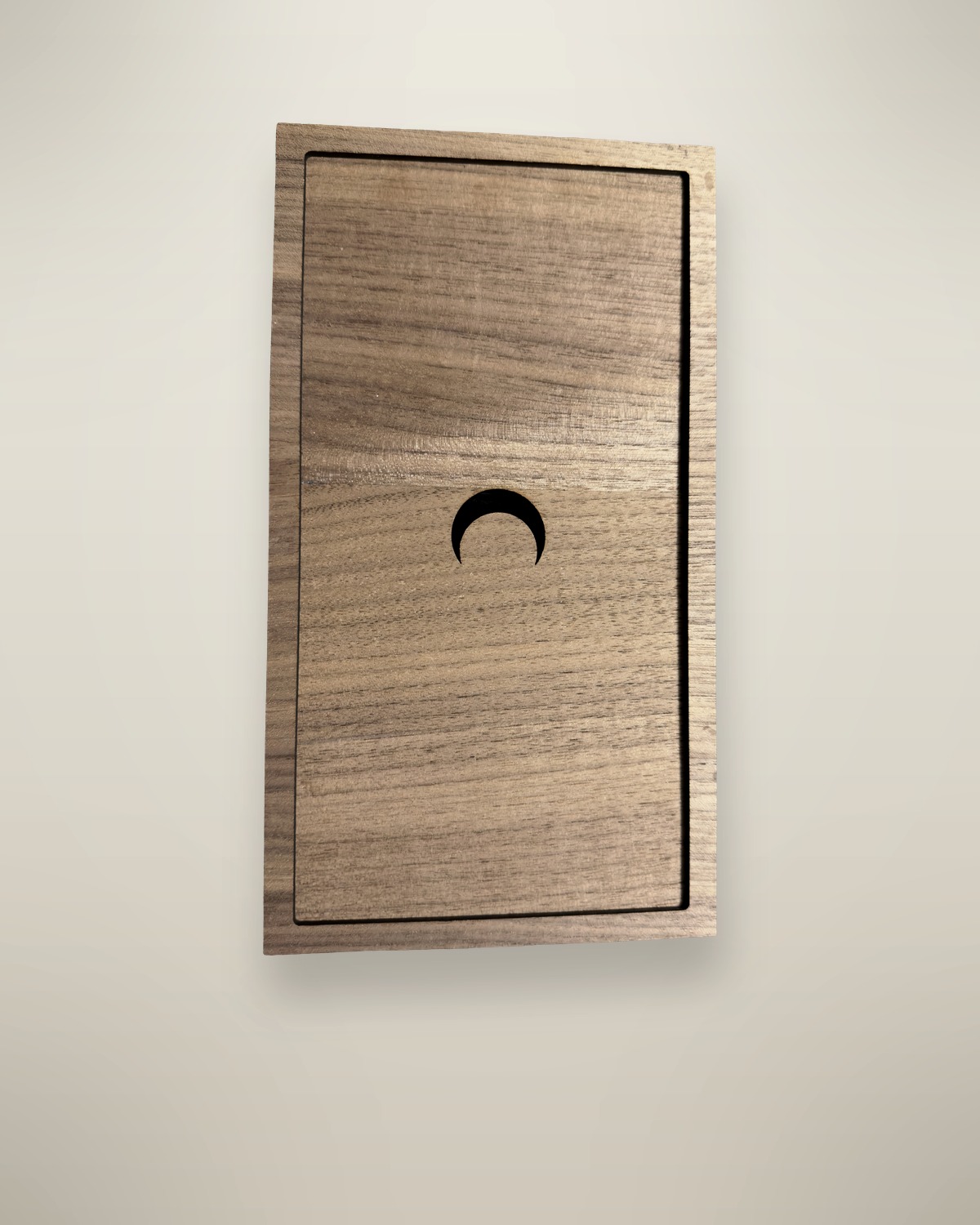
The walnut box, closed — the crescent cut through the lid.
- SlateAvailable now
- Split stone with a natural broken edge, no two the same. It engraves pale grey against near-black, and it holds fine detail — individual hairs, individual ridges. This is what we have spent the most time on, and for a photograph it is still what we recommend.
- GlassAvailable now
- The mark comes up frosted white and reads differently depending on what is behind it — a lit window, a dark shelf, whatever is in the glass. Tumblers and stemware take a name, a date or a signature; flat panels take a whole design. It is the one material that changes through the day.
- WoodAvailable now
- Walnut mostly, and the warmest of the four. The burn goes dark brown and the grain runs through the image rather than around it, so a recipe card in someone's own hand reads like it was always meant to be there. Serving boards, cutting boards, and the box most other pieces arrive in.
- MetalAvailable now
- Brushed stainless and solid brass. The mark is a ceramic compound the laser fuses to the metal — not ink and not paint. It stands proud of the surface enough that you can catch a fingernail on it. The first thing we finished on it was a lighter, because a lighter is a thing somebody carries.
Start a piece
Tell us what you have. Nothing is cut, and nothing is charged, until you have seen a proof and said yes.
Begin